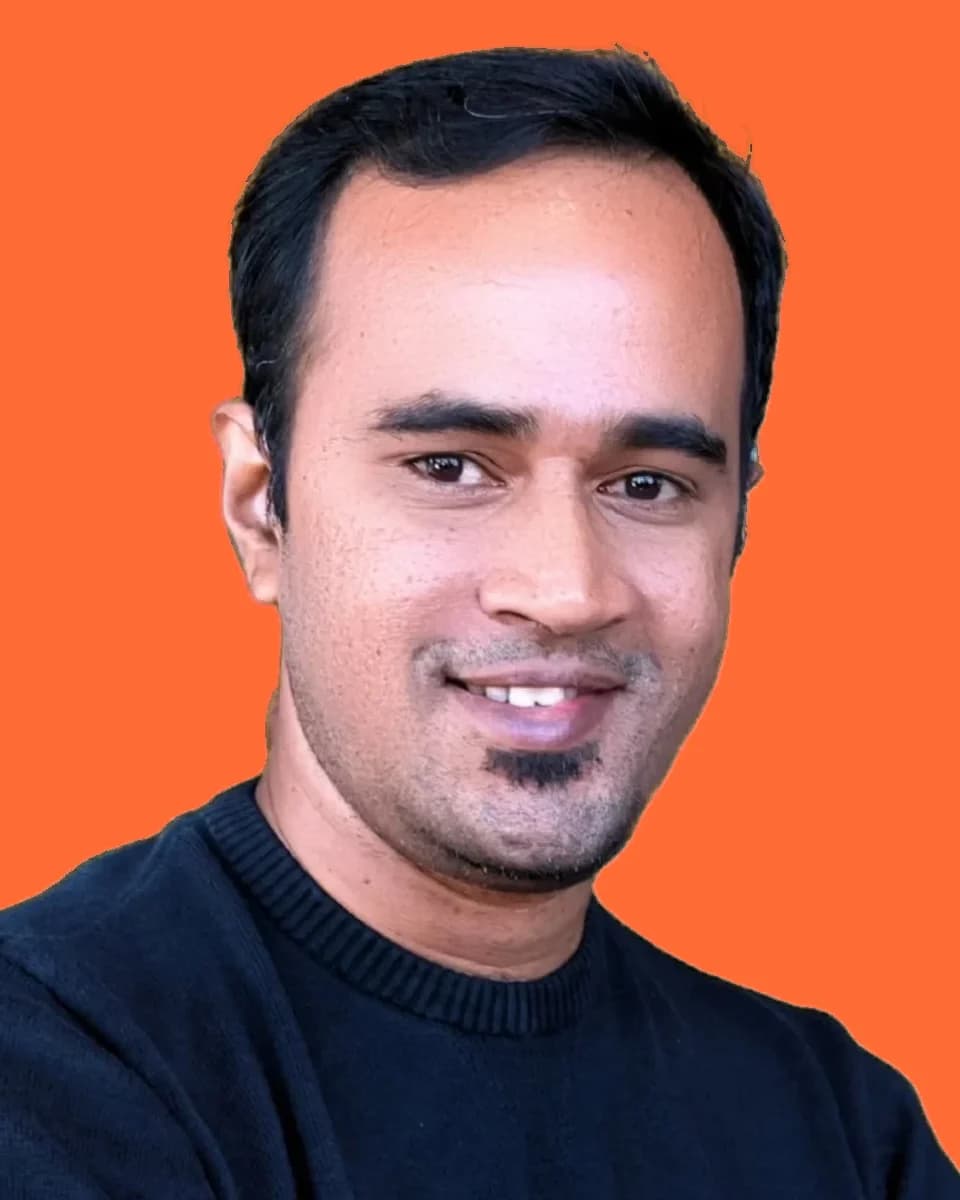
My story, briefly
I failed the seventh standard, sat through it again, and dropped out of school during the eighth. The degrees came much later, by distance education, and they had almost nothing to do with what happened next.
For seven years I worked in corporate jobs, managing a team of 25 to 30 people. The work itself was fine. Everything around it was the problem. Most months I was the one calling good people in on a Saturday to chase targets that were never realistic, and when we fell short, it landed on us, not on the people who set them. I hated those calls. Every week I dragged my feet through that door, until one Saturday night, after another lost weekend, I sent my resignation.
I started freelancing from a village in Andhra Pradesh, where I was the only person around with an internet connection, on an old computer I dusted off. For three months I earned nothing and lived on borrowed money. My first project paid about $45, and I started at $5 an hour. Clients referred me to other clients, website work led to design, and design led to a dozen other tools. Eight years later I was charging $150 an hour.
Today I build automation systems for sales and marketing teams at small and medium businesses in the United States and Europe, through my company, Clik Works (opens in a new tab). What started as one person with an old computer is now an agency of six people. As of September 2026 I live in Boston, and I am moving back to India.
Why this site exists
When I started, almost everything written about freelancing was for people in the West. I didn't know anyone in India who had done it, and the successful freelancers here were busy running their own businesses, and rightly so. Most of my eight years went into learning things nobody told me.
Then people started asking me how I did it, so I started showing them. I have since helped people in India, Pakistan, Europe and the US start freelancing, and I have watched some of them grow their income five times over, sometimes ten. Before they started, almost all of them were afraid, with the same questions I once had. Afterwards, almost everyone told me it was one of the best decisions of their life.
I train and coach go-to-market engineers through a program I am part of, and people with five to fifteen years of experience talk to me from India, Europe and the US. I hear the same thing again and again: I am doing well and my manager is happy with me, but there is a restructuring happening, and I am afraid I might not be needed soon. People stuck in repetitive tasks are now being replaced by AI. I have watched software engineers who assumed their jobs were untouchable get replaced, and the ones struggling hardest are the ones who never built a second skill to stand on. A salary feels like safety, but it is not. Real safety is knowing you could build it all back, anywhere, with your skill and an internet connection.
Clients abroad need skilled people and pay them far more than a company in India will, and with AI there are real chances to keep learning new skills and to work for those clients from home.
This site is for skilled people in India who are thinking about leaving a job to work for clients abroad. It covers the path in the order I lived it: what to tell your family, whether to quit or test it first, which of your skills someone abroad will pay for, how to price, how to find and keep clients, how to get paid, and how to grow when you are ready. Everything here is free to read. The numbers are my own, honest as of September 2026, and I update them when they change.
You should not need eight years.
What I will not do here
- I won't post income screenshots or "I made X lakhs in 30 days".
- I won't hide a course pitch inside a free guide.
- When something didn't work for me, I will write that too.
- It took me eight years, and I won't pretend it takes six weeks.
If you are new here, start here. You can also find me on LinkedIn and X.